Sprunki Ragdoll Playground
- 0.0
- Rating
- 10.00K
- Installs
- Free
- Price

 Analysis by App-foxy
I spent time with Sprunki Ragdoll Playground as a casual physics-sandbox game, and my first impression was that it is built around curiosity rather than a fixed campaign. The appeal is simple: place things, watch them react, remove what you created, and try a different setup. That makes it a very different experience from a level-based puzzle game or a traditional action title. You are not mainly chasing a score; you are testing possibilities.
That open-ended approach can be relaxing when I only want a few minutes of harmless experimentation. It can also feel directionless if I expect missions, unlocks, or a clear path through the game. My review focuses on that distinction, because the value here comes from how much enjoyment you personally get from making your own little experiments.
How the playground feels in everyday use
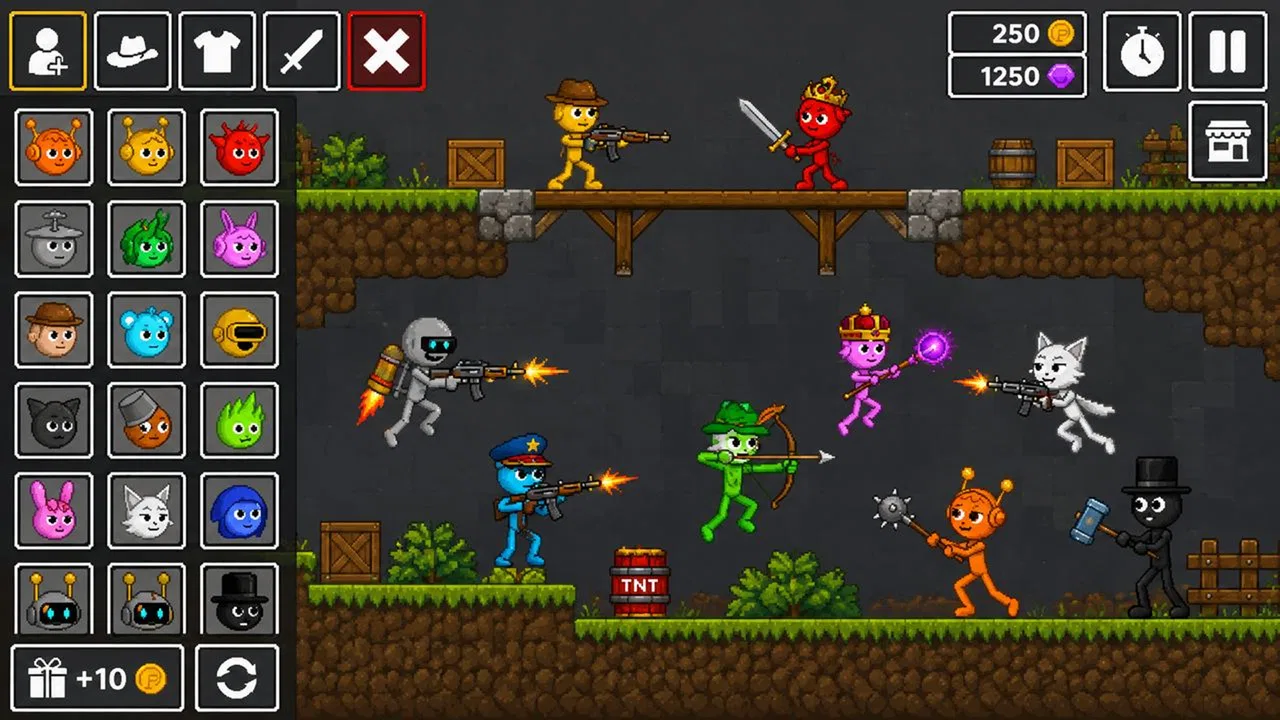
The game belongs to the simulation category, but I would describe it more specifically as a ragdoll sandbox for Android. The central idea is to build scenes, destroy them, and repeat the process with a different arrangement. That loop gives the game a playful laboratory feeling: I can set up a situation, observe the result, then change one part to see whether the outcome changes.
You May Also Like

 AccuWeather: Weather Radar
AccuWeather Review: A Quick, Clear Forecast for Everyday Decisions
For everyday plans, the best forecast is the one you can understand quickly. AccuWeather makes rain timing, radar, and local conditions easy to act on, with a few trade-offs.

 Hill Climb Racing
Why Hill Climb Racing Still Turns Crashes Into One More Run
A tiny car, a bumpy hill and one more upgrade: Hill Climb Racing keeps resurfacing because its simple chaos makes every near-miss feel personal.

 AliExpress - Shopping App
AliExpress Makes Global Shopping Feel Personal, but Shoppers Bear the Risk
AliExpress turns a global marketplace into a pocket-sized discovery engine. Its reach is useful, its shopping loop compelling, and its trade-offs easy to miss.

 Lords Mobile: Kingdom Wars
Lords Mobile Is a Kingdom-Building Routine, Not a Quick Match
A case-by-case verdict on the building, battles, device demands, and social commitments that make Lords Mobile rewarding for some players and exhausting for others.

 PDF Scanner app - TapScanner
TapScanner Makes Paperwork Easier to Capture, Check, and Share
TapScanner makes scanning with a phone feel less like a rescue operation and more like a dependable step in getting work done. Its capture tools are useful, though not flawless.

 Block Blast!
 Shows How Much a Puzzle Game Can Leave Out
A quiet grid game shows why puzzle players increasingly value instant clarity, repeatable skill and low-pressure play—and where the genre still needs to catch up.
More From Our News Desk
View All News


In a typical short session, I might begin by placing a few objects or characters into an open area, create a rough arrangement, and then interact with it until the scene falls apart. The useful habit is not to treat every attempt as a finished creation. The more enjoyable approach is to think in small tests: change the position of one element, alter the timing of an action, or clear the scene and start again. That makes even a brief session feel purposeful.
The ragdoll focus is important. Movement is meant to look loose and unpredictable rather than perfectly controlled. A setup that seems stable can collapse in an amusing way, while a messy arrangement may produce the most interesting result. I found that unpredictability gives the game personality, but it also means players who want precise outcomes may become impatient.
There is no need to approach it like a conventional story game. I would not install it expecting a long narrative, carefully balanced stages, or a competitive ranking system. Its strongest use is as a digital toy box. You open it with an idea, test that idea, and close it when the experiment stops being entertaining.
What the free price means for the decision
The game is free, which makes trying it straightforward. That matters for a sandbox because the main question is subjective: will I enjoy creating situations without a defined objective? I do not have to commit money before answering that question. A quick installation and a few experiments are enough to discover whether the physics and presentation suit my taste.
Free access does not automatically make every limitation irrelevant. If the sandbox feels repetitive after the novelty fades, there is no price argument that can turn it into a deeper simulation. I judge the value by the amount of amusement I can get from repeated experimentation, not by comparing it with a paid game that promises a larger campaign.
For families, the Everyone content rating makes the game easier to consider for a broad audience. I would still recommend that parents try it themselves first, because an age label describes suitability at a general level, while individual preferences about chaotic play and destruction can differ. For a child who enjoys making scenes and watching physics unfold, the open format may be appealing. For one who needs clear instructions, it may require some guidance.
Doublentil is the developer behind the game, and the current release is version 1.0. That version detail sets a reasonable expectation: I treat the experience as an early, simple playground rather than assuming it already has the breadth of a mature simulation platform. The game is available for devices running Android 7.0 or later, so compatibility is practical for many older Android phones and tablets.
Small experiments that make it more rewarding
The best way to get more from the game is to create a repeatable routine instead of tapping randomly. I like starting with a simple scene, taking note of what happened, and rebuilding it with one deliberate change. This turns the sandbox into a basic cause-and-effect exercise. It is a small technique, but it prevents the experience from becoming a string of disconnected crashes.
A second useful approach is to separate construction from destruction. I first arrange the scene without immediately triggering chaos, then decide what I want to test. If I destroy everything as soon as I begin, I lose the chance to understand which part of the setup caused the result. Waiting a moment and observing the arrangement makes the ragdoll behavior more interesting.
I also found that short sessions work better than forcing a long play period. The game is well suited to a spare moment while waiting for an appointment or taking a break from another task. I can run a few experiments, enjoy an unexpected reaction, and leave without feeling that I abandoned a mission. That is a real strength, especially for people who do not want a game demanding daily progress.
One trade-off is that the same freedom that supports experimentation can make the first session feel under-explained. Players accustomed to tutorials may wonder what they are supposed to do. My advice is to treat the opening minutes as a hands-on orientation: try each obvious interaction, reset the scene, and see which actions produce the clearest reactions. The game makes more sense when approached as a toy rather than as a lesson-driven product.
Where it differs from familiar alternatives
Compared with a physics puzzle game, this playground gives me more freedom but less structure. A puzzle normally tells me what result to achieve, so every failed attempt teaches me something about a specific challenge. Here, I supply the objective myself. That is better when I want creative control, but worse when I want the satisfaction of solving a carefully designed problem.
Compared with a life or building simulation, it is more immediate and less focused on long-term management. I do not approach it for resource planning, character development, or a growing virtual world. The pleasure is in the moment-to-moment reaction of the scene. Anyone looking for a persistent project should choose a more structured alternative.
It also differs from a competitive action game. There is no reason to measure my performance against another player when the central attraction is experimentation. That makes the tone less stressful, but it removes the pressure that keeps competitive games engaging for some people. If personal bests, rankings, or tightly tuned controls are essential to your enjoyment, this will probably feel too loose.
The closest comparison is a digital physics toy, and in that space the game’s advantage is accessibility. I can begin without learning a complex rule system. Its limitation is depth: an open sandbox depends heavily on the player’s imagination, so two people may get very different value from the same experience.
Who is likely to enjoy it most
I would recommend it to players who enjoy playful destruction, unpredictable movement, and self-directed experiments. It is especially suitable for someone who wants a free casual game that can be opened without remembering a complicated story or maintaining a long progression path. The Everyone rating also makes it a reasonable candidate for shared play in a family setting, provided the adults are comfortable with the game’s chaotic style.
It can work well as a creative break for older players too. I sometimes enjoy games more when they do not ask me to win. Setting up a scene and watching it behave differently from what I expected gives me a small mental reset. That use case is easy to overlook because the game looks simple, but simplicity is part of its convenience.
I would skip it if I need a campaign, detailed objectives, strategic planning, or a strong reason to return every day. I would also be cautious if physics-based unpredictability annoys me. A ragdoll sandbox cannot guarantee that every experiment will behave neatly, and the absence of a defined target means there is no built-in solution when a session feels flat.
For a child, I would introduce the game by suggesting specific challenges: build a scene that stays balanced, create two different outcomes from a similar setup, or see how changing one placement affects the result. Those prompts add structure without changing the freeform nature of the playground. They also turn passive tapping into a more thoughtful activity.
Practical expectations before installing
The game has passed the early discovery stage with over ten thousand installs, but I would not use that figure as proof that it will suit everyone. Popularity can show that people are willing to try it; it cannot predict whether you prefer open-ended play. My own recommendation is to judge it after several different experiments rather than after the first few taps.
Because it is free, the sensible decision is to test it during the kind of moment when you normally play casual games. If you want a quick distraction, see whether the sandbox gives you enough variety without a goal. If you usually play for an hour or more, pay attention to whether you naturally invent new setups or start repeating the same action. That difference tells you more than the store summary.
I would also keep expectations modest about the release stage. Version 1.0 can be perfectly enjoyable, but I would not assume that it offers the same depth as a long-established simulation game. The right question is not whether it replaces a large physics title; it is whether its focused playground provides enough amusement for your short sessions.
Fairness, spending, and what to expect
For me, the clearest point about spending is that the game is free to try. That lowers the barrier to finding out whether this kind of play suits you, but it is not a promise about every possible purchase or payment arrangement. I would make the install decision on the experience you can actually test, rather than assuming that free entry means the whole game is free of spending prompts.
Likewise, I would not judge its fairness by standards meant for competitive games. The appeal described here is personal experimentation, not winning against other players, so competitive balance is not the reason to choose it. If you are deciding for a child, it is sensible to check the game together and establish your usual rules around purchases before handing over a device.
One practical question is whether it can hold attention beyond a few minutes. I would use a simple test: try a scene built around one idea, then change only one part and see if the result gives you a new question to explore. If you can naturally think of another experiment, the open format is working for you. If you find yourself repeating the same action without interest, a goal-driven puzzle game is likely a better fit.
Another question is whether it suits shared play. I think it can, especially when one person suggests a small challenge and another tries a different arrangement. That gives the session a common focus without needing a score or a winner. It is less suitable for a group that wants fast turns, strict rules, or a clear competitive result.
My final recommendation for the right kind of player
My verdict is positive, with a clear condition: install it if you want a free ragdoll sandbox where you make the entertainment yourself. I like the freedom to build a scene, interrupt it, and try again without worrying about failure. The game’s best moments come from unexpected reactions and from turning a simple arrangement into a small experiment.
I would not call it a universal recommendation. Players who need progression, missions, or competitive goals will find better value in a structured simulation or puzzle game. Those who enjoy physics toys, casual experimentation, and short sessions have more to gain. The absence of a fixed objective is either the main attraction or the main weakness, depending on what I want from a game that day.
Overall, Doublentil has created a straightforward playground with an approachable free entry point and an Everyone rating. I recommend giving it a try on a compatible Android device, then deciding based on one honest test: after the first scene collapses, do you immediately want to build another? If the answer is yes, Sprunki Ragdoll Playground can provide a pleasantly simple place to experiment. If the answer is no, its open format will probably not develop into the deeper experience you are seeking.
FAQs for Sprunki Ragdoll Playground
01What is Sprunki Ragdoll Playground?
Sprunki Ragdoll Playground is a physics-based sandbox game centered on playful character interactions, ragdoll movement, and experimental environments. Players can usually place, move, and interact with characters or objects to create funny chain reactions and unusual scenes. Rather than following a traditional story, the experience focuses on open-ended experimentation, simple controls, and discovering what happens when different elements collide.
02How do you play Sprunki Ragdoll Playground?
Gameplay is generally based on selecting characters or objects, placing them in the playground, and interacting with the environment. Depending on the available tools, you may be able to drag items, launch them, change their positions, or trigger physics-based reactions. The controls are designed to be accessible, so new players can begin experimenting quickly, while creative users can spend more time building entertaining scenarios.
03Is Sprunki Ragdoll Playground suitable for children?
The game has a cartoon-style presentation and simple sandbox mechanics, which may make it appealing to younger players. However, parents should review the content and gameplay themselves before allowing children to play, since ragdoll effects, collisions, and exaggerated character reactions may not be suitable for every age group. It is also worth checking advertisements, permissions, and any in-app purchase options.
04Does Sprunki Ragdoll Playground require an internet connection?
Many sandbox-style playground games can be played offline after installation, but certain features may depend on an internet connection. Advertising, updates, online content, cloud services, or external links may not work without access to the internet. Because requirements can change between versions and platforms, check the official store listing and test the game in offline mode if playing without Wi-Fi or mobile data is important to you.
05Is Sprunki Ragdoll Playground free to download?
Sprunki Ragdoll Playground may be available as a free download, although the exact pricing model can differ between Android and iOS versions. Free access may include advertisements, optional purchases, locked content, or other limitations. Before installing, review the official store page carefully for the current price, supported devices, permissions, age rating, and purchase information so you understand what the download includes.
Pros
- Easy-to-learn physics gameplay suitable for quick casual sessions.
- Creative sandbox encourages experimentation with characters and objects.
- Ragdoll reactions make failures entertaining and unpredictable.
- Works well as a stress-relief game with no complex objectives.
- Simple controls are accessible for younger and casual players.
Cons
- Physics outcomes can feel inconsistent during crowded scenes.
- Limited long-term progression may reduce replay value for some players.
- Frequent collisions can make precise interactions frustrating.
- Visual presentation may feel basic compared with polished sandbox games.
- Some content or features may require ads or in-app purchases.

Sprunki Ragdoll Playground
Gallery